
The four keys and the code
The official description says every night is different, so the code belongs to the run you are in. Read it off the exit panel. A run recorded on 2 November reported 7825, which is one night's answer.
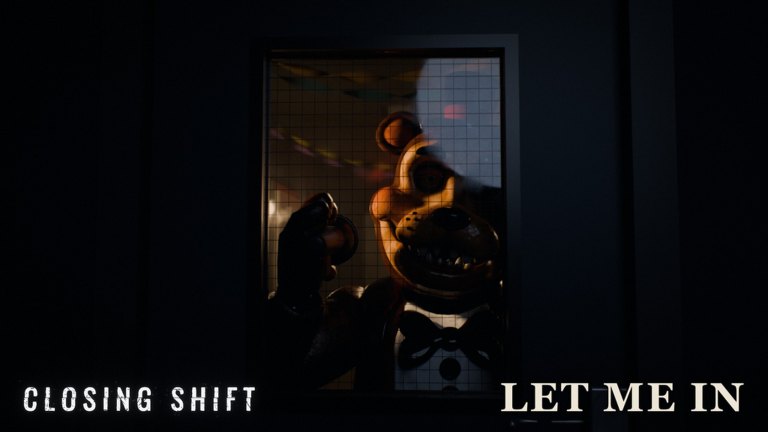
Four keys and four digits. Every run is built around those eight objects, and the single most common way to waste a run is to treat the digits as a fact you can look up instead of a fact you have to read.
What the official text actually says
The description gives the goal in one sentence: "Find four keys and the four-digit code to call the elevator back." Two separate requirements, two separate searches. It also gives one instruction about the band: "A different night every day, daily rewards, levels and badges."
Put those together and the conclusion is unavoidable. If every night is different, the code cannot be a fixed constant that applies to every player forever. It is a value belonging to the night you are in.
So why does everyone say 7825?
Because on 2 November, in one recorded run, that was the code. Player reports from that date describe the exit interface and a four-digit entry, and 7825 is the number that comes out of those reports. It is a genuine data point and a terrible permanent answer.
Here is the difference in practice:
| Claim | Status | What to do with it |
|---|---|---|
| The code is four digits | Stated in the official description | Trust it |
| The panel shows the digits | Player report, 2 November | Read the panel |
| 7825 was the code on 2 November | Player report, 2 November | Try it if the panel is unreadable, expect it to fail |
| 7825 is always the code | Contradicted by "a different night every day" | Ignore it |
A code that works one night and not the next is not a puzzle the community solved badly. It is a randomised lock, and the game expects you to read the lock.
The three-step check that beats any copied number
- Walk to the exit panel before you finish the keys. The digits are printed there. Note them, say them out loud to your group, and only then split for the last key.
- Read them twice, left to right. Four digits is short enough to transpose and long enough to be annoying. If two players are present, have both read it independently and compare.
- Enter it once. If it rejects, go back and re-read. Do not start guessing combinations — the panel is right there, and a wrong entry costs more time than the walk back.
That is the whole method. It takes about fifteen seconds and it is the difference between a page that helps and a page that makes you lose a run in a week.
Where the keys come from
The description confirms four keys and the exits they unlock, but it does not publish spawn coordinates. What it does publish is enough to constrain the search: the restaurant has a Parts and Service room, a kitchen belonging to Chica, an endo room with a keyed cabinet, an arcade, ceiling vents and a security desk with a Puppet on it.
The badge list is effectively a confession of where players go. Five badges name specific rooms or objects:
| Badge | Awards | What it confirms exists |
|---|---|---|
| Endo Room | 5,728 | A locked endo room, a cabinet at the back, endoskeletons between you and it |
| Five-Star Service | 1,154 | Chica's kitchen, with a survival condition attached |
| Neck Intact | 31,881 | Parts and Service, and Freddy walking into it |
| Eyes On The Screen | 4,286 | An arcade you can stand at long enough to be ambushed |
| By The Book | 32,109 | A run where you find a key and a code fragment yourself |
By The Book is the interesting one. Its condition is to find a key and a code scrap yourself and ride out, all in one night — which tells you the code is discoverable in pieces, not only on the final panel. If your group is stuck, that badge is the game's own hint that the digits exist somewhere in the world.
Why four keys and not five
Four keys and four digits is not decoration. It is a count that maps onto a group: four objects means a four-player party can split one each and converge, and a solo player can chain them without backtracking twice.
The practical consequence:
- Solo: take the keys in the order that keeps you moving away from the noise, not the order they appear on a map.
- Duo: one player holds the light and one holds the route. Keys are collected by whoever is closer; the other one watches the corridor.
- Full party: pair up. A four-way split in a horror map means four separate deaths, and Not On My Watch — 7,276 awards — exists precisely because players get dragged away alone.
What happens after the code goes in
The lift is called. That is the last mechanical gate; everything after it is traversal. The escape itself is the eighth-most-common badge in the game at 80,777 awards, and the clean version of it — Not A Scratch, no deaths — is at 7,601. Nine out of ten successful runs include a death, so plan the exit like you expect to lose someone on the way.